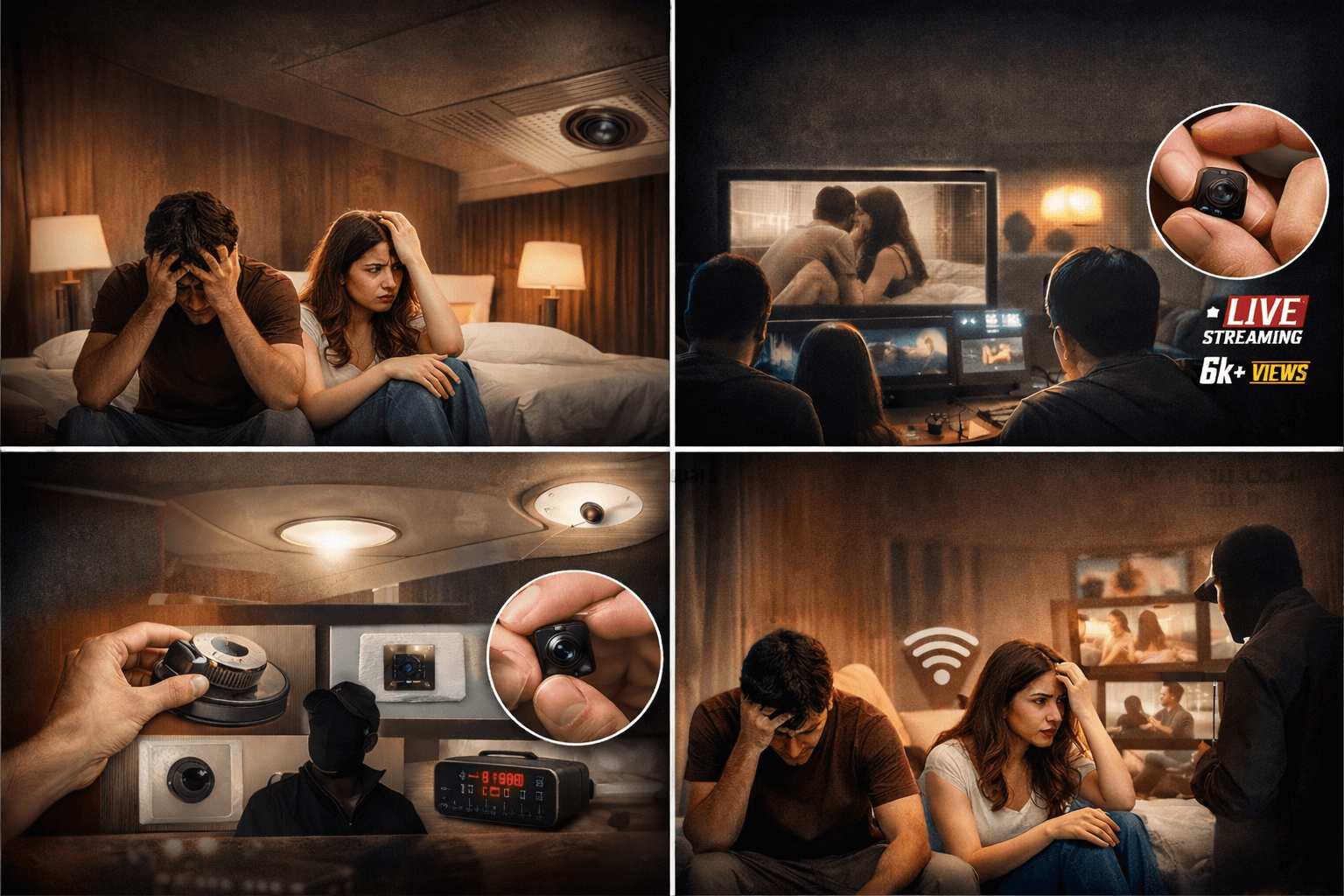
What began as an ordinary hotel stay in China turned into a deeply disturbing experience for a young couple. “Aditya” and “Anaya” (names changed) had spent a night at a hotel in the southern Chinese city of Shenzhen, completely unaware that their most intimate moments were being secretly recorded.
Weeks later, Aditya was scrolling through an adult content channel online—something he had casually done in the past—when a video stopped him cold. Within seconds, he realized the couple entering the hotel room, placing their bags down, and later becoming intimate were none other than himself and his partner. A hidden camera inside the hotel room had captured everything.
That footage was not only recorded but uploaded and made available to thousands of strangers. Multiple platforms host such illegally recorded “spy-cam” videos from hotel rooms, often sold or live-streamed without the knowledge or consent of the people filmed. Much of this content is promoted through encrypted messaging platforms like Telegram.
Investigations into these networks reveal dozens of websites and apps claiming to operate hundreds of hidden cameras across different hotels. These cameras don’t just record; many livestream hotel rooms as soon as guests insert their key card and power is activated. Archived clips dating back several years are often available for download at a fixed subscription fee.
For Aditya, the shock was overwhelming. What once felt like “consensual consumption” of adult content suddenly turned into a nightmare when he found himself on the other side of the camera. When Anaya initially heard about the video, she thought it was a joke—until she saw the footage herself. The realization left her shaken, ashamed, and fearful that colleagues or family members might have seen it. The incident strained their relationship and deeply affected their mental well-being.
In response to growing outrage, authorities introduced new regulations last year requiring hotel owners to regularly inspect rooms for hidden cameras. However, despite these measures, the threat to privacy remains very real.
This is not just the story of one couple. It is a stark warning about how technology, when abused, can turn private spaces into surveillance zones—and how easily personal dignity can be violated in the digital age.