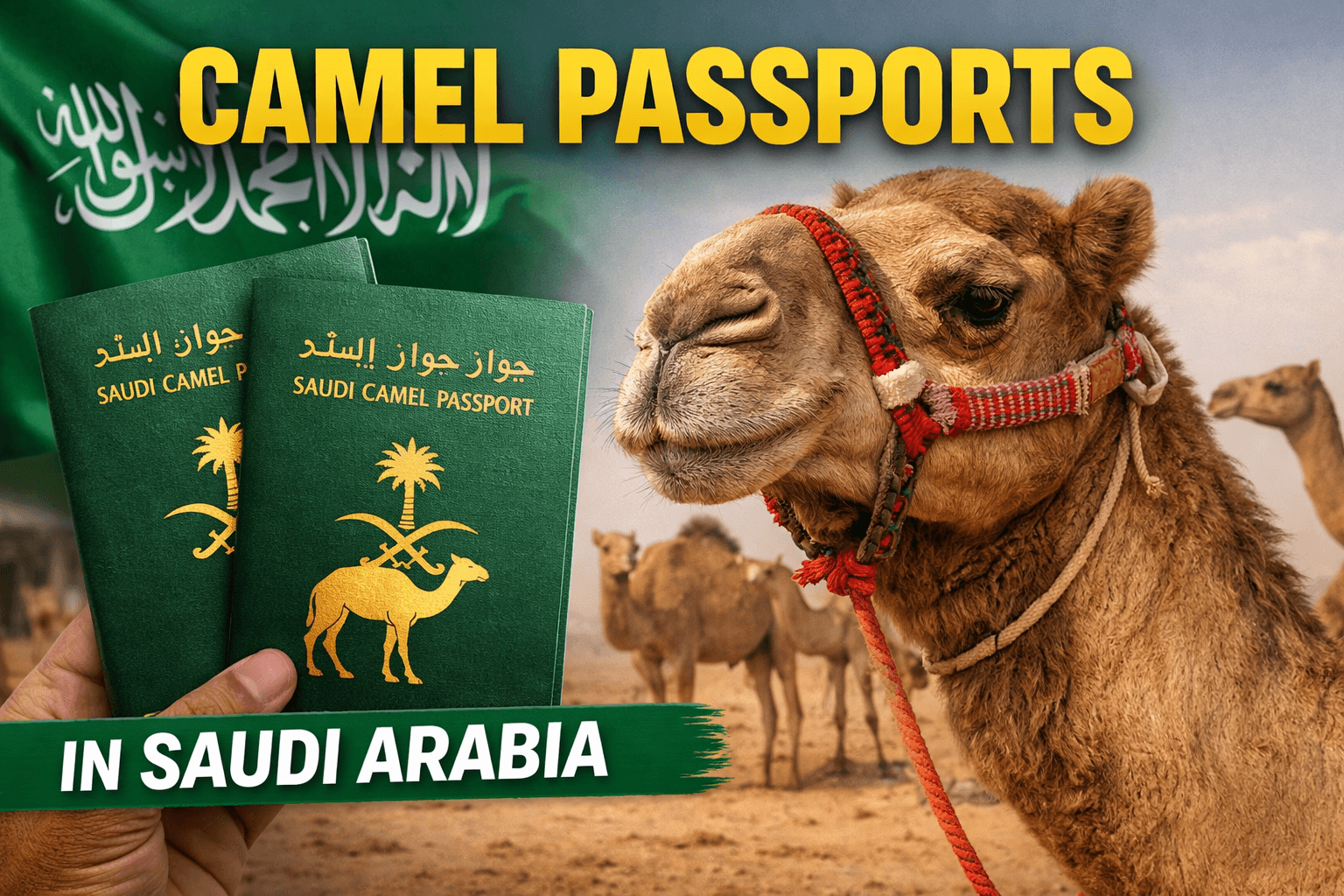
Saudi Arabia has announced a unique policy decision: issuing official passports to millions of camels across the country. While unusual at first glance, the move is part of a broader strategy to modernize livestock management, protect valuable animals, and strengthen the camel-rearing sector that plays a key role in the national economy.
According to Saudi officials, the camel passport initiative will help ensure better care, traceability, and regulation of these animals. Each passport will serve as an official identity document, containing verified information such as the camel’s breed, age, health status, vaccination history, and ownership details. This will allow authorities to maintain a reliable and centralized database of camels and their owners.
The Ministry of Environment, Water and Agriculture has also shared visuals of the new documents on social media. The passport shown is green in color and features the Kingdom’s coat of arms along with a golden camel emblem, symbolizing the cultural and economic importance of the animal in Saudi society.
Government estimates from 2024 suggest that Saudi Arabia is home to around 2.2 million camels. These animals contribute more than two billion Saudi riyals annually to the country’s economy through dairy products, meat, traditional uses, racing, and cultural events. Officials believe that formal identification will reduce illegal trade, improve disease control, and enhance breeding programs.
According to Arab News, there are approximately 35 million camels worldwide, with nearly 17 million located in Arab countries. Somalia ranks first in terms of camel population, followed by Sudan, Mauritania, Saudi Arabia, and Yemen.
Experts say Saudi Arabia’s camel passport system reflects a shift toward data-driven animal management and heritage preservation. By combining tradition with modern governance tools, the Kingdom aims to protect one of its most iconic animals while maximizing the long-term benefits of camel farming for the economy and society.