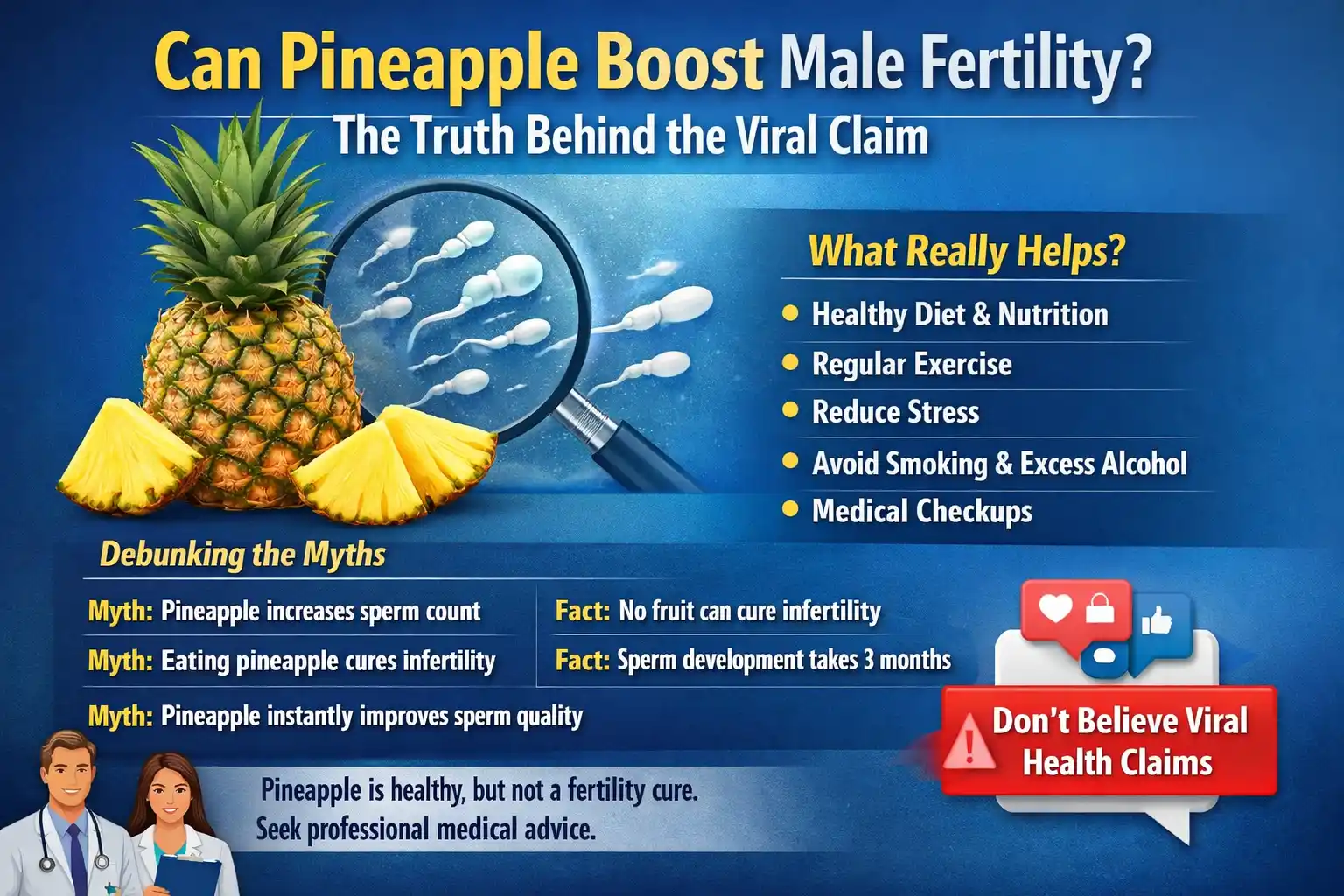
Social media often spreads health tips that quickly gain popularity, even when they are not supported by scientific evidence. One such claim suggests that eating pineapple can significantly improve male fertility and increase sperm count. Because pineapple is a common and nutritious fruit, many people believe that including it in their daily diet can enhance reproductive health. However, fertility specialists say that this belief is largely a misconception and not supported by reliable scientific research.
Pineapple is certainly a healthy fruit that contains important vitamins and antioxidants beneficial for the body. But experts emphasize that male fertility is a complex biological process influenced by multiple factors. Simply consuming one fruit cannot resolve fertility problems. Sperm health depends on a combination of hormonal balance, genetics, lifestyle habits, medical conditions, and overall nutrition. Therefore, relying on viral food remedies instead of proper medical advice can create false expectations.
Why Pineapple Is Often Associated With Fertility
The connection between pineapple and fertility mainly comes from its nutritional profile. Pineapple contains several nutrients that are beneficial for overall health, including:
-
Vitamin C, which helps fight oxidative stress in the body
-
Bromelain, a natural enzyme known for its anti-inflammatory properties
-
Minerals such as manganese and folate
Antioxidants found in fruits like pineapple help protect the body’s cells from damage caused by oxidative stress. Since oxidative stress can negatively affect sperm health and movement, some people assume that pineapple consumption directly improves sperm count and fertility.
However, experts clarify that while these nutrients are beneficial for general health, there is no strong scientific evidence proving that pineapple consumption directly increases sperm count or improves fertility outcomes.
Clearing Up Popular Misconceptions
Myth 1: Pineapple dramatically increases sperm count
Although pineapple contains vitamins and antioxidants that contribute to overall health, there is no evidence that eating pineapple alone can significantly raise sperm count. Sperm production is influenced by various biological factors including hormones, lifestyle, and overall nutrition.
Myth 2: Regular pineapple consumption can cure infertility
Male infertility may occur due to several medical conditions such as low sperm production, poor sperm motility, infections, hormonal imbalance, or structural issues in the reproductive system. While a balanced diet supports overall reproductive health, no single fruit or food can cure infertility.
Myth 3: Pineapple instantly improves sperm quality
Another common misunderstanding is that eating pineapple quickly improves sperm quality. In reality, sperm development is a slow biological process that takes around three months. Any improvements in diet or lifestyle require time before showing measurable effects on sperm health.
Healthy Habits That Support Male Fertility
Experts recommend focusing on long-term healthy habits instead of depending on viral diet trends. Several lifestyle changes can help support reproductive health, such as:
-
Maintaining a healthy weight
-
Avoiding smoking and limiting alcohol intake
-
Reducing stress levels
-
Getting sufficient sleep
-
Following a balanced and nutritious diet
-
Staying physically active
Medical consultation is also important, especially for individuals facing fertility challenges. Early diagnosis and proper treatment can address underlying health conditions that may be affecting fertility.
Conclusion
Pineapple is a nutritious fruit and can be a healthy addition to a balanced diet. However, it should not be considered a solution for improving sperm count or treating male infertility. Fertility depends on many biological and lifestyle factors, and meaningful improvements usually require medical guidance and consistent healthy habits.
As health-related information continues to circulate rapidly on social media, it is important to approach such claims with caution. For accurate advice regarding fertility and reproductive health, consulting qualified medical professionals remains the most reliable path.